Swiss RDRE debut with the Photron FASTCAM NOVA S 16
Photron
25.05.2026
Swiss RDRE debut with the Photron FASTCAM NOVA S 16
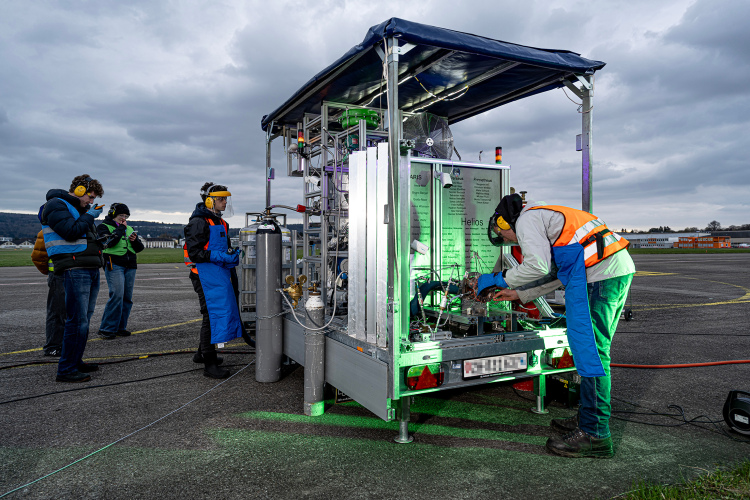
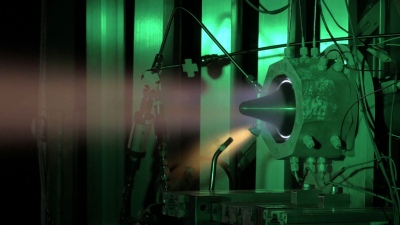
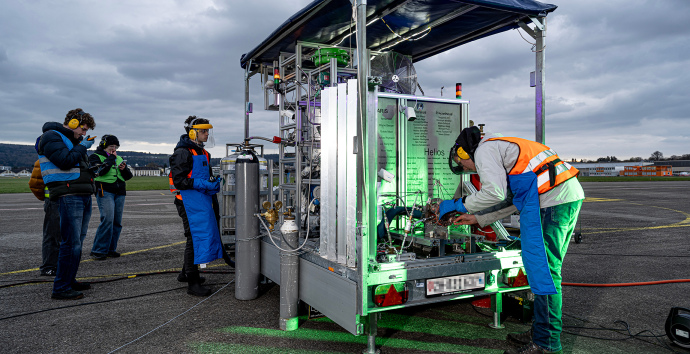
With the successful ignition of Switzerland’s first liquid-fuelled Rotating Detonation Rocket Engine (RDRE), ARIS and PEGASUS have reached a significant technological milestone. The student research team was able to demonstrate stable detonation waves using an oxygen-propane mixture for the first time, making them one of only a handful of teams worldwide to have successfully tested RDRE technology.
RDREs are regarded worldwide as a promising future technology for more efficient and powerful rocket propulsion systems. Unlike conventional engines, combustion does not take place continuously, but rather through controlled detonation waves that travel at extremely high speeds within a ring chamber. This allows the energy contained in the fuel to be utilised more efficiently – a decisive advantage for future space applications.
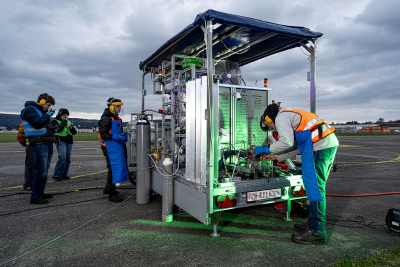
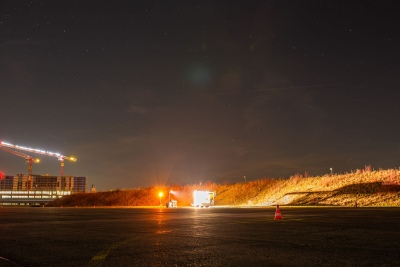
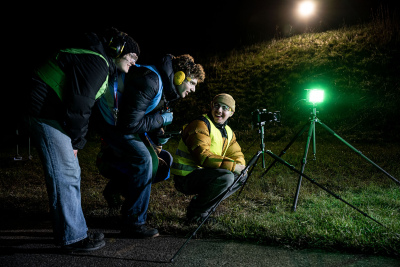
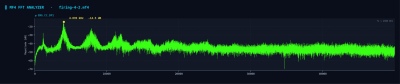
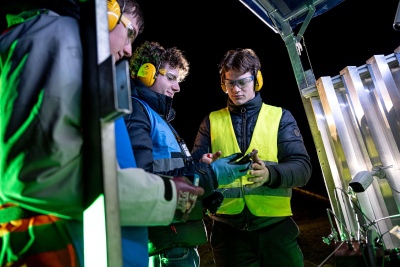
The test took place at Dübendorf Airfield under strict safety precautions. Several sensors and high-speed cameras recorded the ignition process to enable a precise analysis of the formation and stability of the detonation waves. In this field of research, even a stable detonation lasting just one second is regarded as an exceptional success.
To analyse the combustion and detonation processes, the Photron FASTCAM NOVA S-Series S16, supplied by us, has been used. Thanks to state-of-the-art CMOS sensor technology, this high-speed camera boasts exceptional light sensitivity and enables frame rates of up to 1,100,000 frames per second at reduced resolution. At a resolution of one megapixel, the FASTCAM NOVA achieves up to 20,000 frames per second, depending on the model, thereby making even extremely fast physical processes visible and analysable.
Thanks to its global electronic shutter, high-performance 10-gigabit Ethernet interface and flexible lens compatibility, the camera is ideally suited to demanding applications in research, aerospace and industry. The system is complemented by the Photron FASTCAM Viewer software, as well as extensive integration options for MATLAB®, LabVIEW and custom software environments.
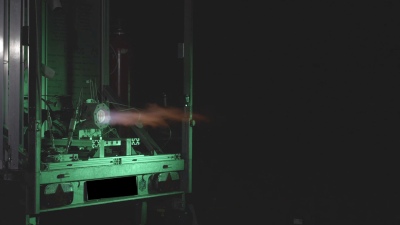
Rotating detonation engine – slow-motion footage
The high-speed footage captured during the test provided the team with valuable data for evaluating the dynamics of the detonation and helped them to precisely analyse and validate the complex processes taking place within the engine.
Only a handful of research institutions and space agencies worldwide are working on bi-liquid RDRE systems. The fact that a student team was able to successfully achieve this technological breakthrough underlines the high level of innovation and engineering expertise behind the project.
We warmly congratulate ARIS and PEGASUS on this impressive achievement and are delighted to be part of this innovative research project.