SIGMA

SIGMA
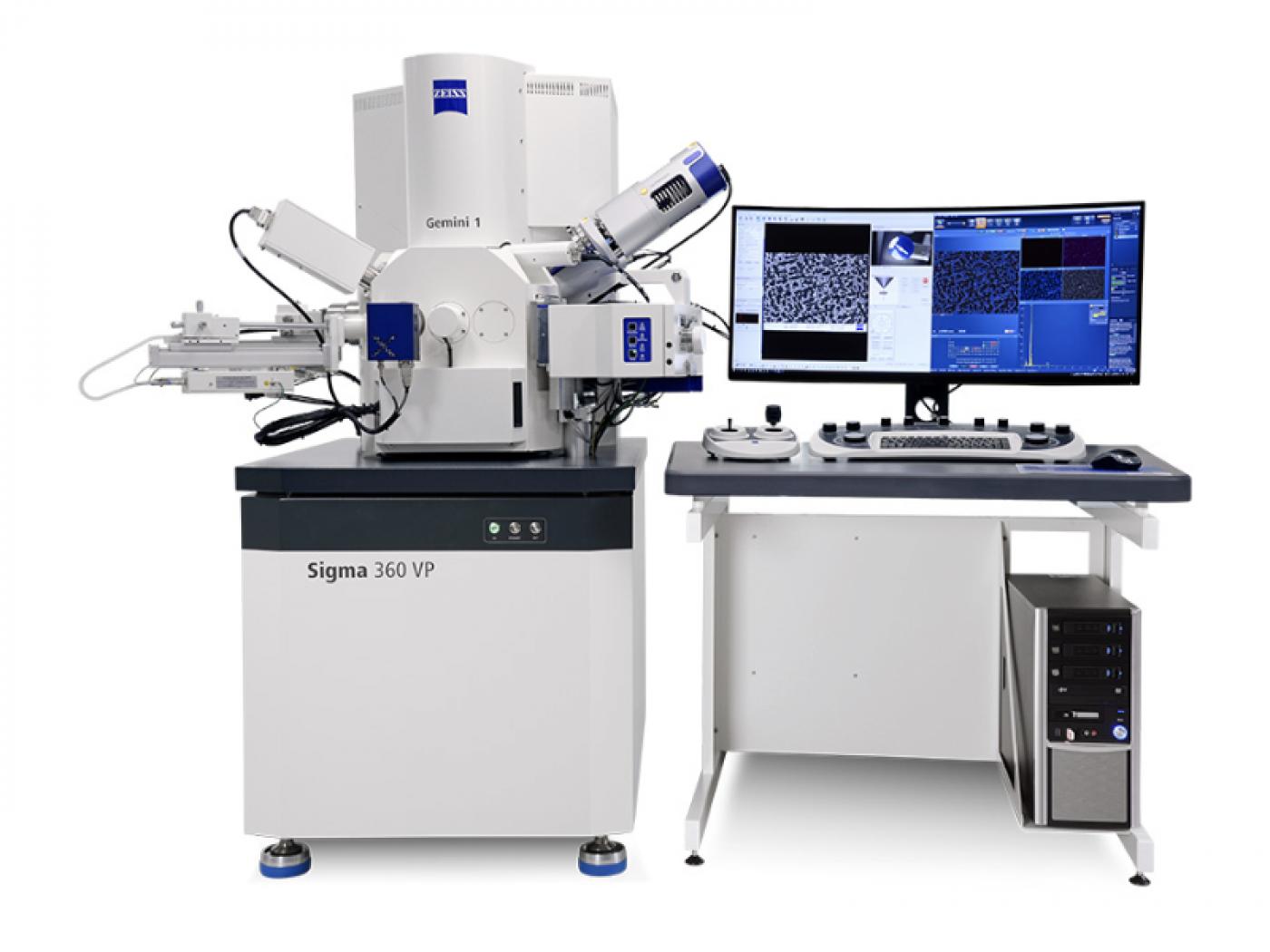
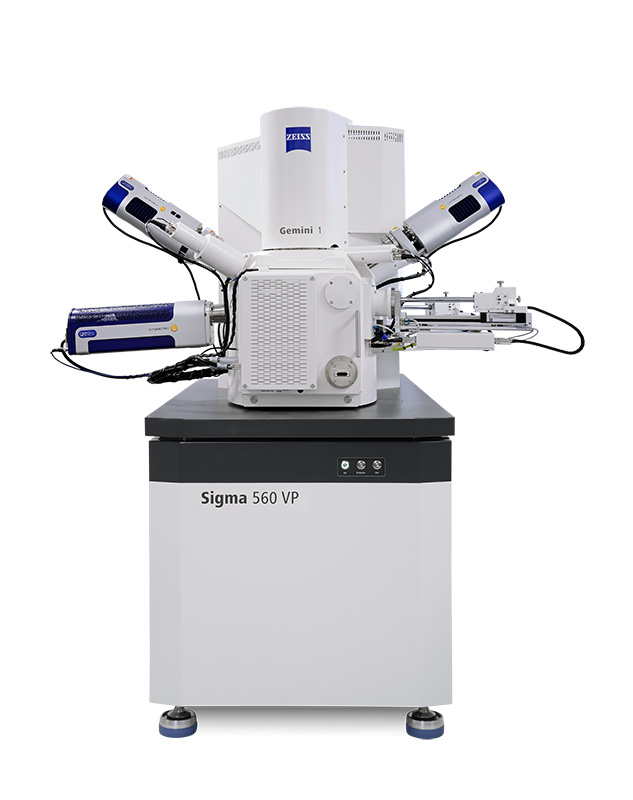
Sigma 360 and Sigma 560 field-emission electron microscopes (FE-SEM)
The Sigma 360 and Sigma 560 field emission electron microscopes (FE-SEM) offer excellent value for money. Carry out your elemental analysis quickly and conveniently using best-in-class EDS geometry. Rely on precise, reproducible results.
Combine FE-SEM technology with advanced analysis capabilities. Benefit from the tried-and-tested Gemini electron optics. Choose from a wide range of detector options: you can image particles, surfaces and nanostructures.
Organise your imaging and analysis routines and boost productivity.
- Sigma 360 and Sigma 560 models
- Resolution up to 0.5 nm at 15 kV with DCV (Sigma 560)
- Resolution at 1 kV: 1.3 nm (Sigma 360) / 1.2 nm (Sigma 560)
- Resolution at 500 V: 1.9 nm / 1.5 nm
- Accelerating voltage 0.02–30 kV
- Magnification 10× to 1,000,000×
- High vacuum and Variable Pressure / NanoVP lite
- SE, In-lens SE and BSE detection; further detectors optional
- EDS/EDX, optional EBSD and WDS
- Five-axis motorised sample stage
- Image storage up to 32,000 × 24,000 pixels
- Maximum scan speed 50 ns/pixel
- SmartSEM Touch and ZEN core software

Sigma family
The ZEISS Sigma range combines high-performance FE-SEM technology with intuitive operation for efficient imaging and analysis. Thanks to high-resolution imaging at low voltages and flexible detector configuration, the Sigma is suitable for a wide range of applications – from materials research and quality control to biological and geological samples.
With NanoVP lite, Sigma also enables high-quality imaging and analysis of non-conductive samples. The Sigma 360 and Sigma 560 models offer high-performance solutions for central imaging centres as well as demanding high-throughput analysis tasks.
Sigma 360 versus Sigma 560
Technical Specifications
|
|
Sigma 360 |
Sigma 560 |
|
Electron source |
Schottky-field emission |
Schottky-field emission |
|
Resolution at 15 kV |
0,9 nm |
0,7 nm |
|
Resolution at 15 kV with DCV |
0,7 nm |
0,5 nm |
|
Resolution at 1 kV |
1,3 nm |
1,2 nm |
|
Resolution at 500 V |
1,9 nm |
1,5 nm |
|
Accelerating voltage |
0,02–30 kV |
0,02–30 kV |
|
Chamber connections |
10 |
14 |
|
EDS connections |
2 |
3 |
|
Focus |
Imaging and routine analysis |
Advanced analysis and in-situ experiments |
Frequently Asked Questions
What are the differences between the ZEISS SIGMA and a ZEISS EVO?
The ZEISS SIGMA and ZEISS EVO systems differ primarily in terms of resolution, analytical performance, ease of use and infrastructure requirements.
ZEISS SIGMA – Advantages:
The ZEISS SIGMA is designed for the highest image quality and analytical performance. It offers higher resolution and higher beam intensity than the EVO, thereby enabling a more detailed representation of fine structures. The system delivers superior sensitivity and resolution, particularly at low acceleration voltages (low kV). The integrated in-lens detection enables high-quality surface imaging, whereas comparable detection capabilities are more limited on the EVO.
The Sigma 560 is equipped as standard with a 5-axis eu-centric sample stage, which enables precise sample positioning. An optional STEM extension is also available for analytical applications. An optional airlock allows for rapid and clean sample transfer without the need to fully vent the chamber. Furthermore, the system is characterised by simpler adjustment and more convenient handling of the electron beam.
ZEISS SIGMA – Limitations:
Compressed air and an external cooling unit are required to operate the system. Furthermore, the costs for the electron source (cathode) and its replacement are higher than for the EVO.
ZEISS EVO – Advantages:
The ZEISS EVO is a robust and versatile SEM system with comparatively low operational requirements. The cathode can be replaced by the user, thereby reducing maintenance effort and service costs. Thanks to its air-cooled design, no additional cooling unit is required. The double-condenser column ensures stable beam guidance and supports flexible use across a range of applications.
ZEISS EVO – Limitations:
Compared to the SIGMA, the EVO offers lower resolution and beam intensity. Image quality and sensitivity at low accelerating voltages are also limited. Adjusting the electron beam is more labour-intensive and less user-friendly than with the SIGMA. Consequently, the EVO is particularly suitable for routine applications, whilst the SIGMA offers advantages for demanding, high-resolution examinations.
Examples of use

sediment
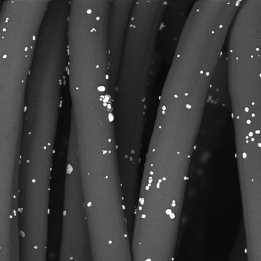
Fibres coated with silver particles
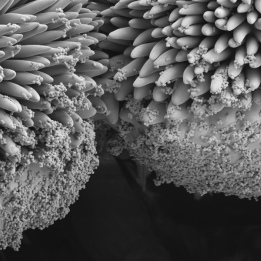
flower pollen
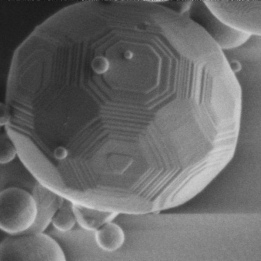
Al2O3 nanospheres
We are looking forward to hearing from you