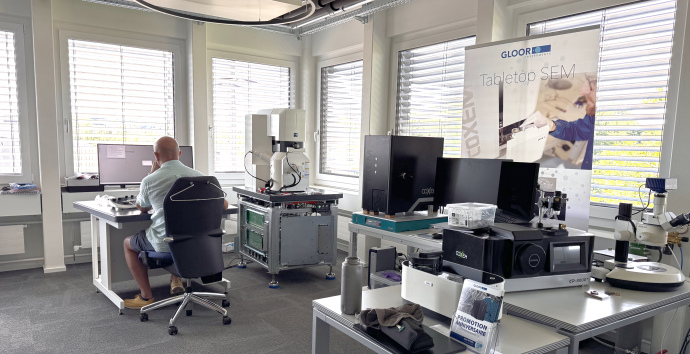
Tabletop SEM COXEM
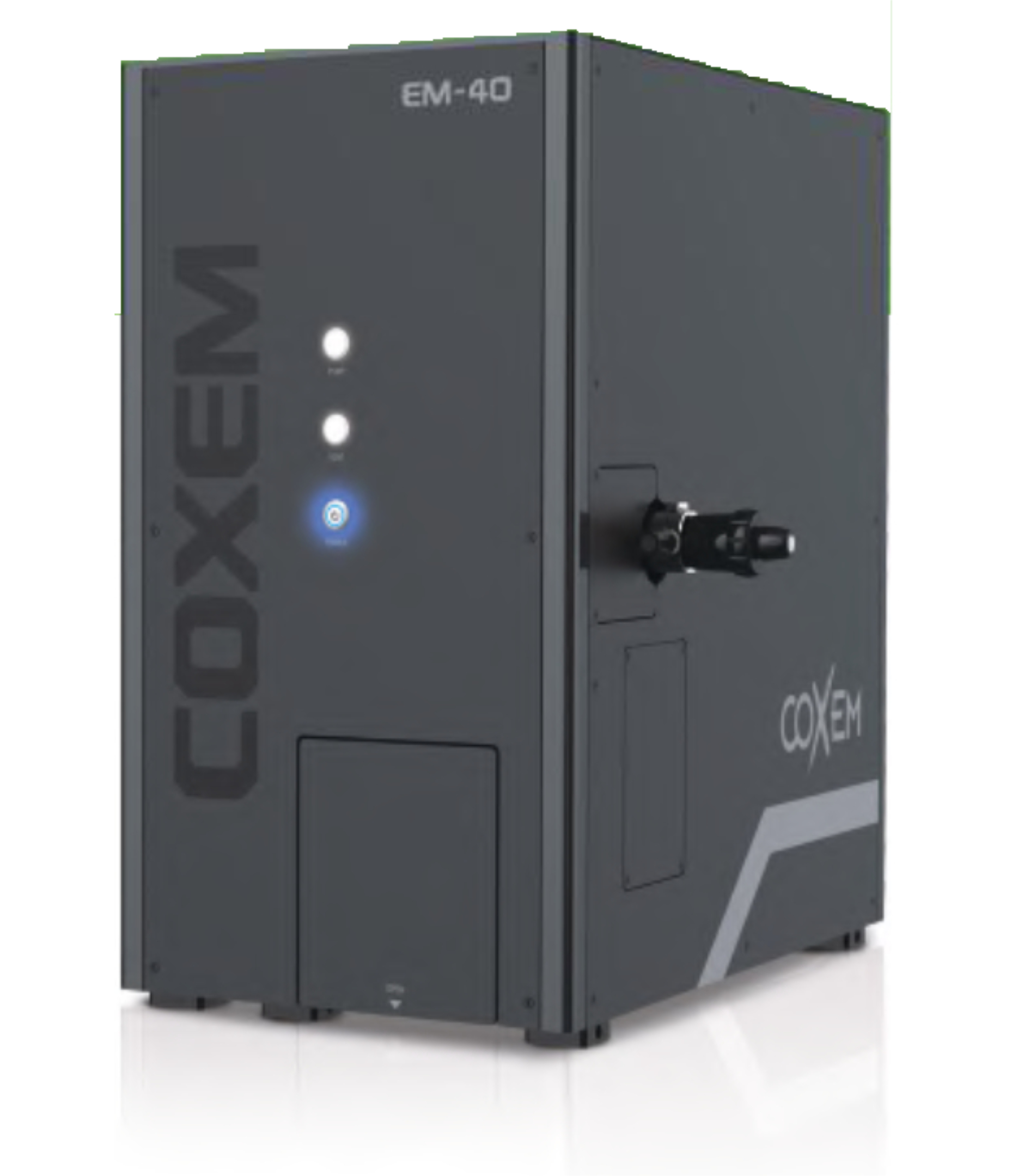

Tabletop SEM COXEM
A COXEM tabletop SEM (EM-40) combines the small footprint and ease of use familiar from optical microscopes with the high resolution and analytical capabilities of an electron microscope. The optical navigation camera allows you to quickly locate your sample and the area to be examined, whilst the automatic functions and intuitively designed software generate an image in no time at all.
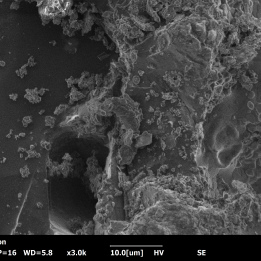
Whilst the SE (secondary electron) detector produces an image with topography and a large depth of field, the BSE (backscattered electron) detector is ideal for revealing differences in composition, such as foreign particles or inclusions.
The instrument can be operated under high vacuum or under what is known as low vacuum (optional). High vacuum is ideal for achieving high resolution with electrically conductive or coated samples. For insulating samples, a lower vacuum is created in the chamber so that the charge on the surface is neutralised.
The wide voltage range in the COXEM benchtop SEM offers significant advantages for imaging a variety of samples. The low voltages below 5 kV enable the surface to be imaged with extreme detail and structure, whilst the high voltages up to 30 kV are highly beneficial for material identification using EDX or for detecting subsurface structures. The high voltage can be adjusted in 1 kV increments.
The COXEM SEM can be upgraded with a microanalysis system, enabling you to carry out qualitative and quantitative analysis of the sample. The EDX system comprises an X-ray detector, hardware and the AZTec software, offering a wide range of capabilities such as mapping and line scans. A microanalysis system from Bruker is available as an option, which, in addition to the EDX, also allows for the installation of an EBSD detector.
- Magnification 20 – 100,000
- Resolution 10 nm
- Accelerating voltage 1 – 30 kV (in 1 kV steps)
- Electron source: tungsten filament
- High voltage, low vacuum (optional)
- Detectors: SE and 4-channel BSE (Kompo)
- Navigation camera
- Motorised sample stage, X, Y, Z, 40 mm × 40 mm × 40 mm
- Chamber dimensions, L × W × H 315 mm × 560 mm × 580 mm
- Intuitive operation, with optional joystick
- EDX detector (optional): Oxford Instruments or Bruker
EBSD (optional)
Frequently Asked Questions
What are the differences between the COXEM tabletop REM and a ZEISS EVO?
The ZEISS EVO and COXEM systems differ primarily in terms of performance, flexibility and space requirements.
COXEM benchtop SEM – advantages:
COXEM systems are compact, require little space and are particularly user-friendly. This makes them ideal for simple applications and a quick start.
COXEM benchtop SEM – limitations:
Compared to the EVO, they are more sensitive to environmental influences, have a smaller sample chamber and offer lower resolution (<10 nm). A 5-axis stage is only possible with an additional sample holder.
ZEISS EVO – Advantages:
The EVO offers higher resolution and a larger sample chamber, and comes fitted with a 5-axis motorised stage as standard. Thanks to improved shielding, it is less susceptible to environmental influences such as vibrations or electric fields. Furthermore, the system is designed to be flexible for future expansion with detectors, thanks to additional ports.
ZEISS EVO – Limitations:
It has a comparatively large footprint.
Examples of use
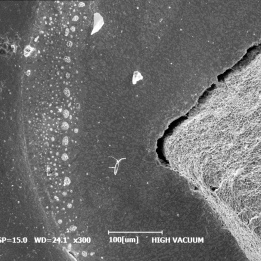
SE detector
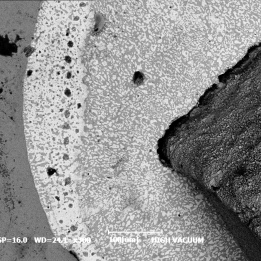
BSE detector
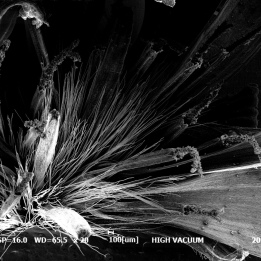
High-vacuum mode
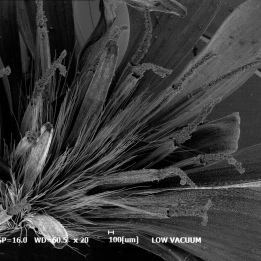
Low-vacuum mode
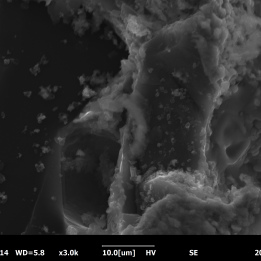
High voltages
Low voltages
We are looking forward to hearing from you