GeminiSEM




GeminiSEM
The ZEISS GeminiSEM is a family of high-resolution field-emission scanning electron microscopes (FE-SEM) designed for the analysis of surfaces, nanostructures and material properties. The systems combine ZEISS Gemini electron optics with high-performance detection and flexible analytical extensions. They are suitable for applications in materials science, nanotechnology, semiconductor research, materials testing and the life sciences.
The GeminiSEM series enables imaging with sub-nanometre resolution, even at low accelerating voltages. This allows fine surface structures and delicate samples to be examined with high resolution. The combination of in-lens detectors, variable operating conditions and different electron optics supports both surface-sensitive imaging and analytical characterisation.
The product range comprises the ZEISS GeminiSEM 360, 460 and 560. The GeminiSEM 360 is designed for versatile investigations, whilst the GeminiSEM 460 is geared towards sophisticated materials analysis and automated measurement sequences. The GeminiSEM 560 utilises the Gemini-3 electron optics and offers particularly high resolution at low accelerating voltages. Depending on the configuration, the systems can be upgraded with EDS/EDX, EBSD and other analytical techniques.
- FE-REM / FE-SEM with field-emission electron source
- GeminiSEM 360, 460 and 560 models
- Resolution up to 0.5 nm at 15 kV (GeminiSEM 560)
- Up to 0.4 nm at 15 kV with DCV (digitally enhanced resolution)
- 0.8 nm at 1 kV (GeminiSEM 560, without DCV)
- Accelerating voltage 0.02–30 kV
- Magnification up to 2,000,000×
- High vacuum and NanoVP for variable pressure conditions
- In-lens SE and in-lens BSE detection
- Expandable with EDS/EDX, EBSD and other analytical techniques
- Motorised sample stage and automated measurement sequences
- Smart Autopilot on the GeminiSEM 560
Related webinar:
Discover how to enhance the resolution and material contrast of your SEM images, capture even challenging samples with exceptional accuracy, and achieve optimal imaging results with the ZEISS Gemini 3 electron column – even at ultra-low accelerating voltages.


GeminiSEM family
ZEISS GeminiSEM stands for effortless imaging with sub-nanometre resolution. These FE-SEMs (field-emission scanning electron microscopes) combine outstanding imaging and analysis. Thanks to innovations in electron optics and a new chamber design, you benefit from improved image quality, user-friendliness and flexibility. Capture sub-nanometre images at under 1 kV without an immersion lens. Discover three unique versions of the ZEISS Gemini electron optics.
A comparison of the GeminiSEM 360, 460 and GeminiSEM 560
Technical Specifications
|
GeminiSEM 360 |
GeminiSEM 460 |
GeminiSEM 560 |
|
|---|---|---|---|
|
Electron optics |
Gemini 1 |
Gemini 2 |
Gemini 3 |
|
Resolution at 15 kV |
0,7 nm |
0,7 nm |
0,5 nm |
|
Resolution at 1 kV |
1,2 nm |
1,1 nm |
0,8 nm |
|
Resolution at 15 kV with DCV |
0,5 nm |
0,5 nm |
0,4 nm |
|
Accelerating voltage |
0,02–30 kV |
0,02–30 kV |
0,02–30 kV |
|
Focus |
Versatile imaging |
Analytics and automation |
Surface imaging at low voltages |
Frequently Asked Questions
What are the differences between the GeminiSEM and a SIGMA?
The ZEISS GeminiSEM and ZEISS SIGMA systems differ primarily in terms of resolution, level of automation, performance at low acceleration voltages and capital expenditure.
GeminiSEM – Advantages:
The ZEISS GeminiSEM is designed to meet the highest standards of resolution and image quality. It offers better resolution than the SIGMA and achieves superior imaging performance, particularly at low acceleration voltages (low kV). The integrated NanoVP mode also enables the examination of non-conductive or sensitive samples under variable pressure conditions.
Numerous automation functions, such as automatic focusing and beam alignment, simplify operation and improve the reproducibility of measurement results. Furthermore, the high-performance electron optics enable a higher operating speed and a more efficient workflow during demanding investigations.
GeminiSEM – Limitations:
The main disadvantage of the GeminiSEM is its higher purchase and investment costs compared with the SIGMA.
SIGMA – Advantages:
The ZEISS SIGMA offers an excellent balance between performance and investment costs and represents an economically attractive solution for a wide range of applications. It is suitable for both routine examinations and demanding analytical tasks, whilst offering a high degree of flexibility in terms of available detectors and expansion options.
SIGMA – Limitations:
In a direct comparison with the GeminiSEM, the SIGMA achieves a lower resolution and exhibits reduced performance, particularly at low accelerating voltages. Furthermore, the operating speed is lower during complex examinations, and the level of automation is lower. Consequently, more manual intervention is required for beam adjustment and optimisation of imaging conditions.
Examples of use
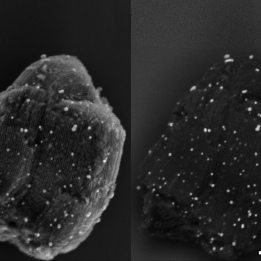
SE BSE comparison silver nanoparticles
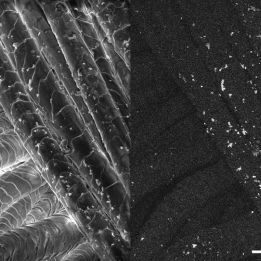
SE BSE comparison zeolite Ag
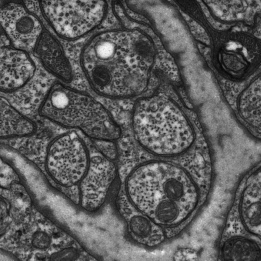
STEM mouse brain tissue
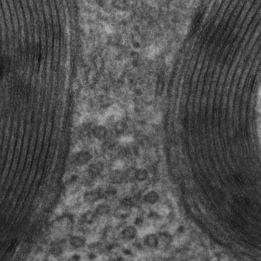
STEM mouse brain tissue myelin
We are looking forward to hearing from you!